
An infrared leak detector is an essential tool for quickly identifying leaks in various systems, from refrigeration units to piping. These devices use advanced technology to detect gases that are often invisible to the naked eye.
Infrared Leak Detector will help ensure safety and efficiency in all your operations.
Remember, an infrared leak detector is not just about identifying issues; it’s about preventing them before they escalate.
In conclusion, the advantages of using an infrared leak detector are clear, making them an invaluable asset for many professionals.
Utilizing an infrared leak detector can ultimately lead to significant savings on repair costs and promote energy efficiency in the long run.
This technology is essential for anyone serious about leak detection and energy conservation.
Investing in an infrared leak detector is a proactive step towards ensuring safety and efficiency in any environment.
Implementing best practices, such as frequent inspections using infrared technology, can significantly reduce long-term repair costs.
Effective monitoring of moisture patterns helps maintain a dry and healthy environment, preventing future damage.
Building Inspection and Maintenance
Regular building inspections are crucial for maintaining structural integrity.
Infrared leak detectors facilitate these inspections.
They reveal hidden moisture problems that may not be visible to the naked eye.
During an inspection, professionals can focus on areas prone to moisture, such as:
Key applications include:
Detecting Moisture and Water Leaks
Infrared leak detectors excel at identifying moisture and water leaks.
They work by detecting temperature differences caused by moisture accumulation in walls, ceilings, and floors.
Applications and Best Practices
Infrared leak detectors are essential tools in identifying moisture issues and conducting thorough building inspections.
Their effectiveness in locating hidden leaks makes them invaluable for maintenance professionals.
Components of an Infrared Leak Detector
An infrared leak detector typically consists of several key components.
The main element is the infrared sensor, which detects variations in thermal radiation.
This sensor is often paired with a thermal imaging camera that displays the detected thermal data visually.
Additionally, many detectors include an LCD screen for easy monitoring and reading of data.
LED indicators may also be present, signalling leak detection status clearly.
These components work together, allowing the user to analyse and respond to potential leaks efficiently.
Principles of Infrared Sensing
Infrared leak detection relies on the principle that gases absorb infrared radiation at specific wavelengths.
When a gas leaks, it creates a temperature difference compared to its surroundings. The infrared sensor detects this difference, allowing for precise leak identification.
Thermal imaging cameras are frequently employed in this process.
These cameras translate infrared radiation into visible images, showing hotspots where gas may be escaping.
The sensitivity of these detectors is crucial. Higher thermal sensitivity enables them to identify smaller temperature changes, leading to earlier leak detection.
By pinpointing leaks early, users can save on repair costs and improve energy efficiency.
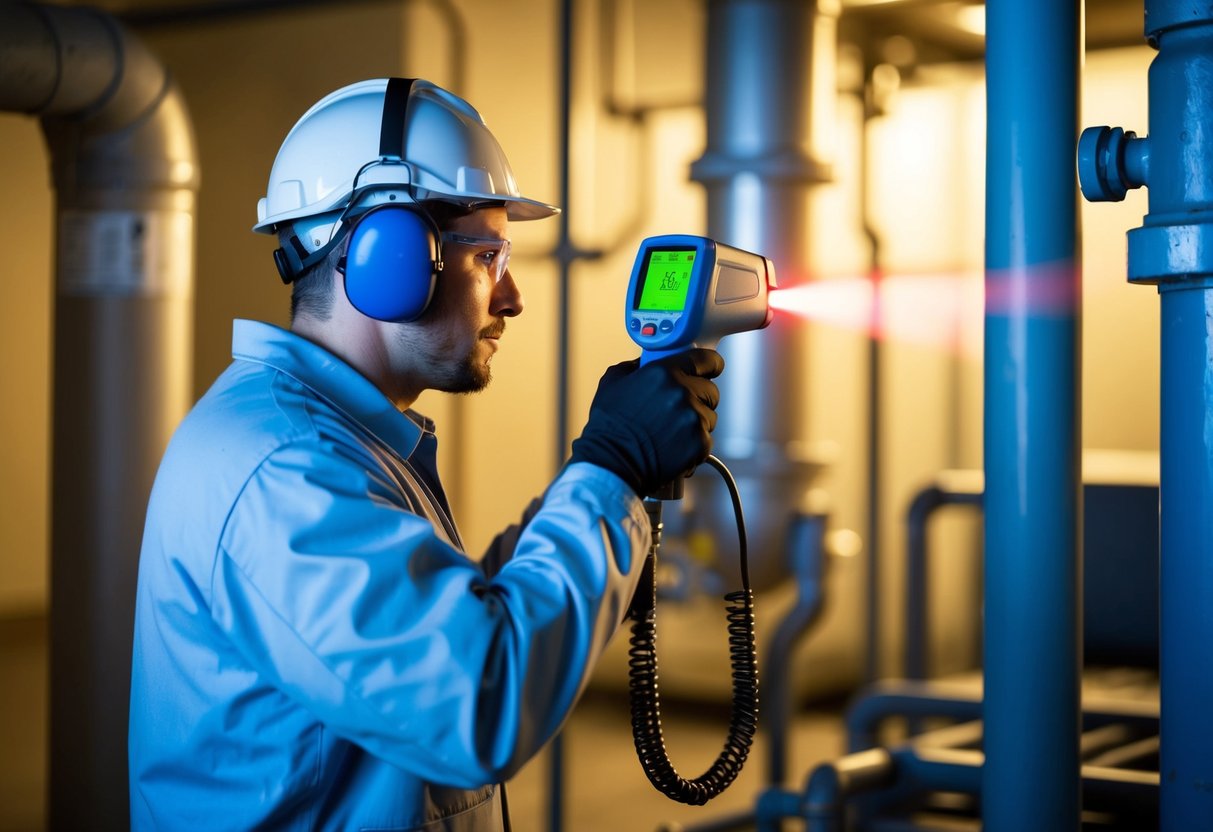
Many professionals rely on infrared leak detectors because they provide accurate results without the need for intrusive methods.
With the ability to identify even the smallest leaks, these tools prevent larger issues that could lead to significant damage or increased energy consumption.
As concerns about energy efficiency and environmental impact grow, the importance of having a reliable leak detection solution becomes even more clear.
Investing in a quality infrared leak detector not only enhances safety but also promotes prolonged equipment lifespan.
This post will explore the benefits, features, and top choices for infrared leak detectors, ensuring readers can make informed decisions for their specific needs.