
How to Check for a Hidden Water Leak Under a Condo Floor
Detecting a concealed water leak under a condo floor requires a methodical approach combining non-invasive acoustic testing, thermal imaging, and moisture mapping. Because strata properties feature strict structural boundaries, using advanced diagnostics allows specialists to pinpoint leaks precisely without breaking tiles or damaging shared infrastructure.
Step 1: Perform a Water Meter Isolation Test
Begin by shutting off all indoor taps and water-using appliances. Check your main supply valve or digital utility meter to see if the flow indicator is still spinning, which confirms an active pressurized leak.
Step 2: Deploy Non-Destructive Detection Methods
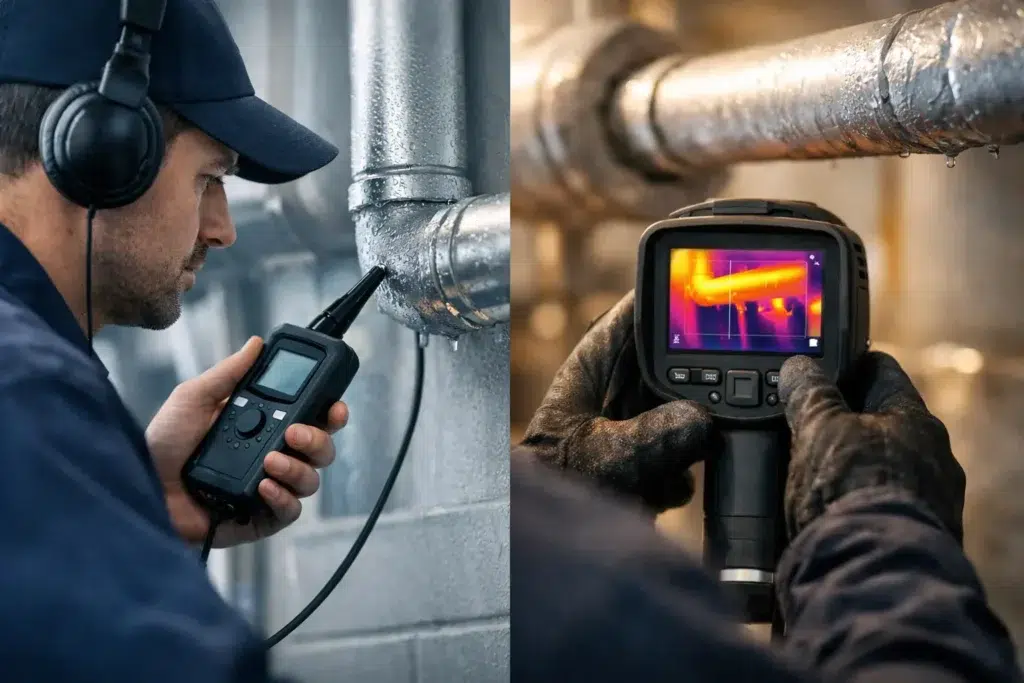
- Acoustic Listening: High-sensitivity ground microphones capture the unique sound of pressurized water escaping through concrete subfloors.
- Infrared Thermal Scanning: Thermal cameras highlight unusual temperature differentials caused by hidden moisture saturation under tiles.
- Moisture Mapping: Pinless meters scan surface finishes to map the exact spread zone of the water leak.
Why You Should Avoid Hacking Condo Floors Blindly
Blindly hacking into concrete condo slabs risks severing embedded electrical conduits, post-tension cables, or neighboring drainage lines. Professional leak detection ensures that only a targeted core-drill hole or minimal opening is made right above the rupture point.
Next Steps for Strata Properties
- Notify your building management corporation (JMB or MC) before scheduling diagnostic work.
- Engage a certified specialist team to provide a comprehensive detection report with photos and exact coordinates.